What if our "gods" are not gods at all?

Yes, I know. It's outrageous to forgive someone who failed to love and protect you completely when you were a vulnerable little child. But perhaps by now, you have grown enough to be the bigger person, turn around, and initiate the flow of love that you have always wanted.
Your mother or father could never accept … about you.
You were too loud, too smart or dumb; you had a different opinion on something.
You were different. You were weird. You demanded too much attention.
You disobeyed.
You felt unloved, rejected, abandoned, hurt.
You never felt you fit in.
Your mother or father was not the ideal person that you, as a vulnerable little creature, could completely rely on.
Our expectation of limitless love, affection, and always feeling welcome is perhaps nowhere more obvious—and unrealistic than when we face our parents.
I know that there are many kinds of people out there who should never be parents. But they are. Having a child requires neither intelligence, conscious choice, nor a loving heart—only the ability to conceive.
As an adult, you know that.
Yes, it’s outrageous that your parents hate that you are gay, or that you, as a woman, have more liberal and egalitarian views on relationships than they had.
Your parents may not have figured out how to share power and control with you; how to hear your voice and trust your choices; how to accept you unconditionally. Or how to protect themselves when their deep insecurities are activated by some of the things you do.
They are limited in so many ways.
But one thing I know, and perhaps secretly you suspect it too.
Parents are human beings first, parents second. Gods they are not.
People don’t just suddenly become wiser when they become parents.
Wisdom is not bestowed. It might come to us through seeking and perspiration.
They are not the divine figures that you, secretly, envisioned as a little child.
Yes, for little creatures, their parents are omnipotent gods. Sometimes overwhelming, but the creators and the protectors of the child's entire universe nevertheless.
As humans, they are fallible, limited, sometimes even crooked beings.
Now that you are older, perhaps even call yourself an ‘adult,’ can you, would you, risk becoming the larger-than-your-parents person and forgive their limitedness, their flaws, their sins?
After you’ve emptied your bucket of sorrow and looked deep into your love-deprived heart, can you find room to love someone who perhaps could never find room in their heart to love you?
You know, just to get the flow of love started…
And then, who knows what’s possible…
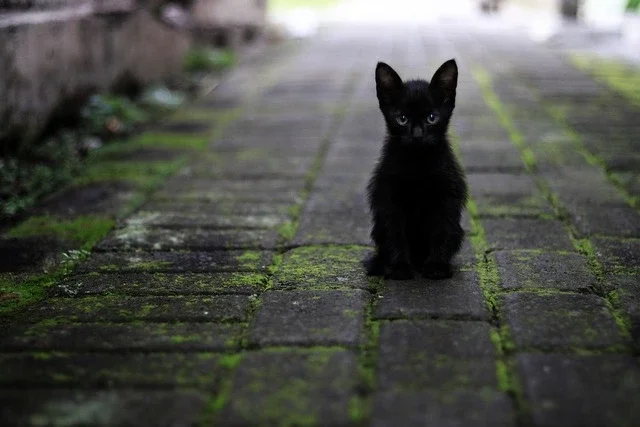
Without love, we are kittens cast out onto dangerous, busy, lonely streets, left only with our own wits to survive. Even as adults, we keep crying for someone to take us home and warm us up. No wonder we are always terrified, looking over our shoulders, and scratching everyone who even vaguely appears to be grabbing us for their own benefit. We become prisoners and victims of our own starvation for love and acceptance
What if love is still waiting for us to open our locked doors?
Some ‘crazy’ person (Mahatma Gandhi, perhaps?) once said that even if an eye for an eye feels right, that ‘right’ will leave the whole world blind. Who is that going to satisfy?
Why?
Because those without sin cast the first stone…
Perhaps because none of us is that ideal person that we’d like to be…
Or, if you want to feel loved, sometimes you have to initiate loving, even if it doesn't make sense first or violates your sense of fairness.
A client once told me, with mock indignation, how her beloved dog had rolled around in chicken shit during a visit to her parents’ home. She was in therapy because she felt deeply hurt by her family’s rejection and ridicule. I asked her whether she could imagine loving her family the way she loved her dog: seeing all the mess, the annoying behavior and the hurt they caused, yet still loving them. The image clicked: love and hurt can coexist. It gave her a new way to understand her own feelings, and as her depression improved, we concluded therapy a few sessions later.
When you open your eyes, you may see your parents not gods at all, but limited human beings, cast on the streets of life, waiting to be loved, too, just like you.
If you have the heart, perhaps you can forgive and love.
And when you forgive, what’s left of you?
Forgiveness doesn't have to mean forgetting the hurt or excusing what happened. If you're struggling with the lasting effects of childhood wounds or complicated family relationships, trauma therapy can help you find healing, understanding, and a greater sense of peace. Reach out today to explore how therapy can support you.
I’d love to hear what you’re thinking about these topics. If you have questions or would like to discuss something you’ve read, please get in touch.
This article is an update of a blog that was originally published on https://majapsychotherapy.com
Marianna Jakucska is a licensed marriage and family therapist in Sacramento, CA. She does psychotherapy online across California, in a setting that is variably called telehealth, video therapy or therapy-over-the-internet. She specializes in collaborative working with highly perceptive/sensitive people, the creative and the “misfit” to assist them in building a fulfilling life. Her clinical focus is on developmental trauma, depression, anxiety, cultural adjustment, and people single over 30; CBT, DBT, Existential and Eclectic approaches. She is bilingual in Hungarian and brings a broad cultural perspective into her therapeutic work. She is supportive of the LGBTQ Community and people who are seeking spiritual as well as mundane meaning to their life.